Politics
As State Lawmakers Eye Transit, RTA Talks Funding Crunch, Potential Cuts and What Pritzker’s Thinking
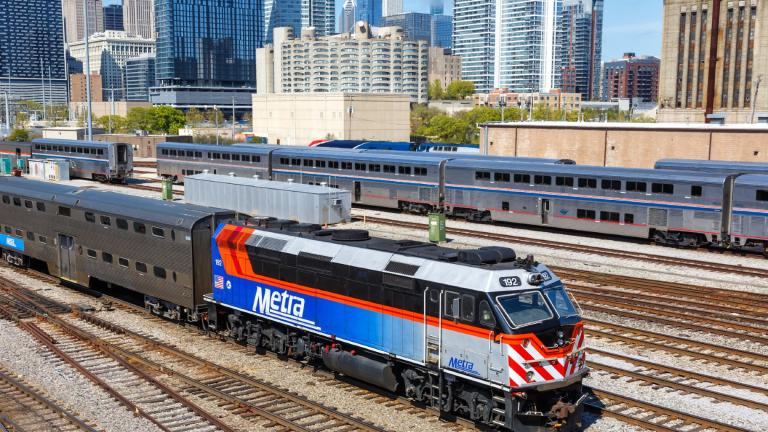
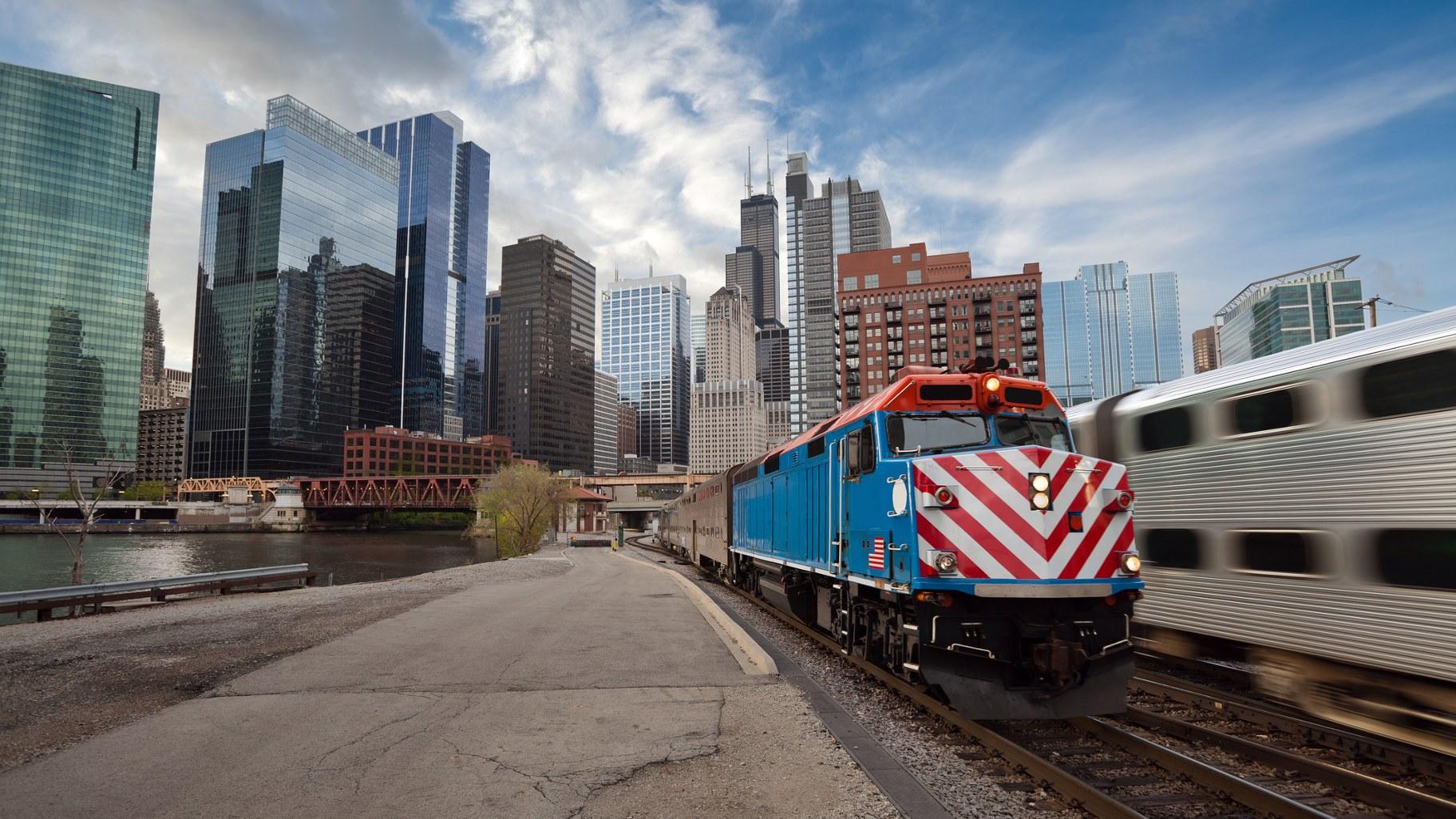 A Metra train is pictured against the Chicago skyline in a file photo. (Rudy Balasko / iStock)
If the General Assembly doesn’t come up with a solution to the looming fiscal cliff facing Chicago-area transit by the end of June, agencies will have to drop everything and immediately start planning for drastic service cuts of up to 40%.
That was the dire warning at Thursday’s meeting of the Regional Transportation Authority board, where RTA officials and directors batted around ideas that could satisfy lawmakers’ calls for reform as a precondition for desperately needed funding.
The Chicago area’s transit agencies are facing a $730 million fiscal cliff in 2026 when federal COVID relief money runs out, money that’s filling the gap in operating budgets from still-sluggish ridership numbers. Some legislators and advocates back the idea of doing away with RTA, CTA, Metra and Pace in favor of a new regional mega-agency, the Metropolitan Mobility Authority.
RTA has instead pitched boosting its authority to get the three transit agencies to coordinate. Among the ideas it’s pitching lawmakers on are having the agency set fare policy and serve as a central hub for customer services issues; set service standards and ensure CTA, Metra and Pace are complying with those benchmarks; and head up planning for capital projects and region-wide transit efforts.
“We’ve heard loudly and clearly from the legislature and taxpayers and the public: if you’re going to get more money, there’s got to be some reform,” said Leanne Redden, RTA’s executive director. “We’ve tried to move the conversation to (be) more outcome-based – where are the pain points or where are the issues that we’ve struggled with in the past, and how could we do some things differently to work towards a better outcome?”
RTA board chair Kirk Dillard swatted away suggestions from some transit watchers that the authority already has the needed legal muscle to compel cooperation.
“We have got to let the powers that be know – we don’t have those powers. I wish we did, but we don’t have them,” Dillard said. “There is a perception out there that we have to debunk.”
Rob Nash, RTA’s government affairs director, said the conversation about funding has been “lagging” the conversations around service improvements and governance reform.
“To be 100% honest, I think a lot of people are interested in having that conversation on Nov. 6,” Nash said – the day after the election. “While those conversations, I think, have been happening a little bit more behind closed doors with lawmakers, that conversation has to come to the forefront. None of this really matters if you have to shrink the system by 40%.”
While lawmakers are currently scheduled to return in November for a veto session, Nash said the earliest he expects any “potential progress” on a fix for Chicago-area transit is in January’s lame duck session, before the new General Assembly is sworn in. The bulk of the work is widely expected to happen in the spring session.
Nash warned that if lawmakers don’t come up with a plan to stave off a crisis by the end of the state’s fiscal year on June 30, 2025, transit planners will have to stop work on projects like Metra’s shift to regional rail, CTA’s work to improve bus travel on city streets, and Pace’s rapid transit bus efforts. Instead, he told the board that transit agencies will be under a federal mandate to start weighing the equity impact of slashing service and begin holding public hearings on those cuts.
The proposal to merge Chicago-area transit agencies is paired with a proposed $1.5 billion new funding, which the RTA supports – though officials noted they’re “agnostic” as to sources for that new money. The authority is also asking lawmakers to eliminate the farebox recovery ratio, mandating that up to 50% of operating budgets come from passenger payments.
The RTA’s been heavily involved in a series of public hearings convened by the state Senate Transportation Committee on the importance and future of transit that wrapped up this week. There’s also a closed-doors working group in the state House convened at the behest of Speaker Emanuel “Chris” Welch. Nash said the RTA will be briefing that working group later this month.
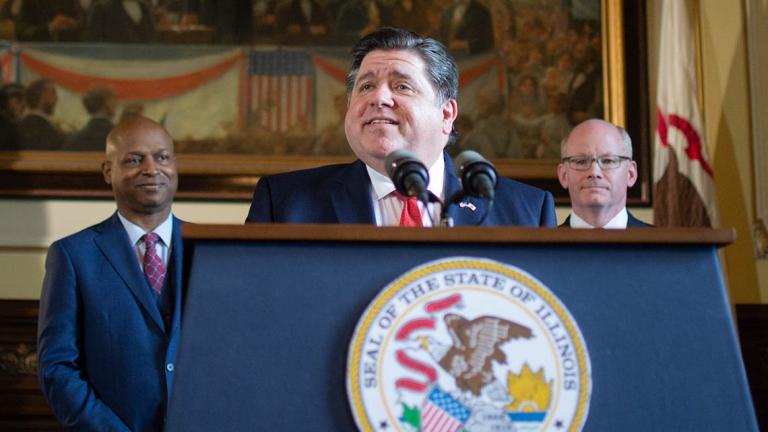
Asked where Gov. J.B. Pritzker stands on the issue, Nash said he’s engaged in the process but hasn’t yet weighed in on specific proposals.
“He, I think, is focused on allowing the General Assembly to come up with at least some measure of a consensus and he, I’m assuming, will weigh in as that emerges in the legislative process,” Nash said. “He takes that seriously – let the different constituencies hash it out in the legislature, and then we’ll come together as we’re closer to a final proposal.”
Dillard added the RTA’s briefed Deputy Governor Bria Scudder, who oversees transportation issues for Pritzker.
“It’s a long road ahead,” he said. “We’re making progress.”
Contact Nick Blumberg: [email protected] | (773) 509-5434 | @ndblumberg